Balancing Your Budget: Tips and Tricks That You Shouldn’t Miss
Introduction

Learning how to create and balance a budget is an important part of achieving financial well-being. Before you can balance your budget, it is a good idea to plan out what your budget may include.
Definition

Budget
A budget is a plan to help manage money. It outlines how much money is expected to be earned or received and how much money is expected to be spent or saved.
Financial well-being
“The extent to which a person can comfortably meet all of their current expenses and needs while also having the strength or resilience to continue doing so in the future. It is not only about income. It is about having control over personal finances, being able to understand and move on after a financial setback, being on track to meet financial goals, and being able to make choices that allow a person to enjoy life.”
Source:
Financial Consumer Agency of Canada. (2025, September 17). Financial well-being in Canada: Survey results. Government of Canada. https://www.canada.ca/en/financial-consumer-agency/programs/research/financial-well-being-survey-results.html
Budgets can help people track how much money they earn, spend, and save. Budgets can help people save up money for short-term and long-term goals.
Before we get to the question of how we balance our budget, let’s think a bit more about the steps to creating a budget.
Creating a budget
Part of planning a budget means thinking about finances and your goals for the future. Press the following tabs to learn more about the types of goals a person might set.
A financial goal is an objective a person sets that affects how they spend or save their money. Some goals may be immediate or short term, while others may be considered long term.
An earning goal is an objective for the amount of money a person wants to make.
A saving goal is an objective for the amount of money a person wants to set aside for future use.
Check out the following video entitled "Nerds on Money: How to Make a Budget" to learn more about how to create an initial budget. As you watch the video, take note of any useful information.
Think

In the previous video, what steps does Kat share on how to create a budget? Think about what each step is and press the Show Suggested Answers button to compare your thinking.
| Step 1 | Check in with yourself. |
|---|---|
| Step 2 | Figure out where and when you are spending your money. |
| Step 3 | Figure out where and when money is coming in. |
| Step 4 | Make a plan that suits you. |
| Step 5 | Adjust as necessary. |
What do you think are the most important things to remember when creating a budget?
Press the Possible Answer button to learn more.
A budget is tailored or made specifically to match people’s needs. A budget for one person can look completely different from one budget to another, and that is okay. It is also a good idea to return to your budget regularly and adjust it so that it makes sense for you.
Self check
Next, check your understanding with the following true/false questions. Select the correct answer, then press Check Answer to see how you did.
Is it balanced?
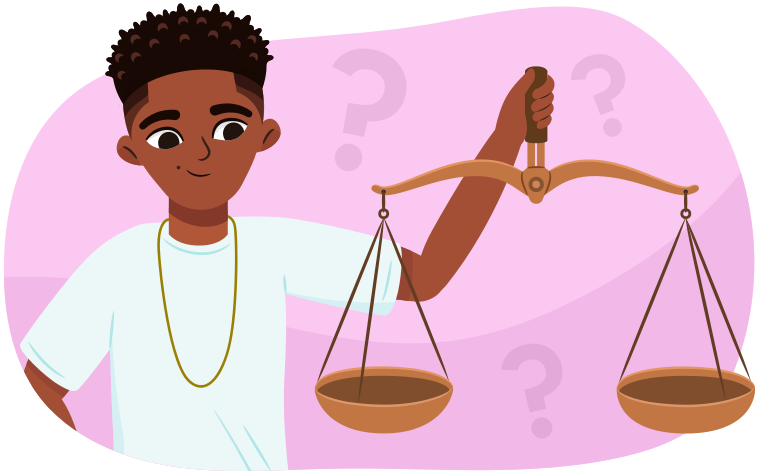
Once you have started tracking and following a budget, it’s time to think about whether your earnings and expenses are balanced. A balanced budget is a budget in which income is equal to or greater than expenses.
We can figure this out by subtracting our spending or expenses from income or earnings.
If someone is spending the same amount or less than they are earning, their budget is balanced.
An unbalanced budget
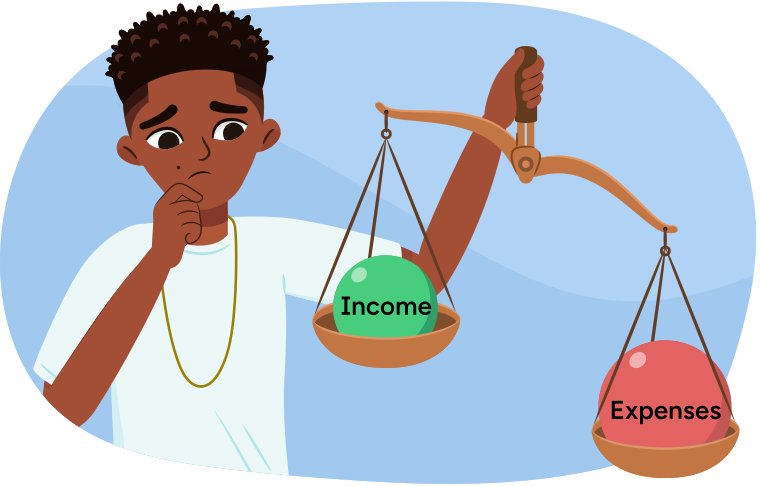
If someone is spending more money than they earn, they will go into debt. Debt means that money is owed, and being in debt means that you are required to pay back money owed.
Income – expenses = negative number
A balanced budget
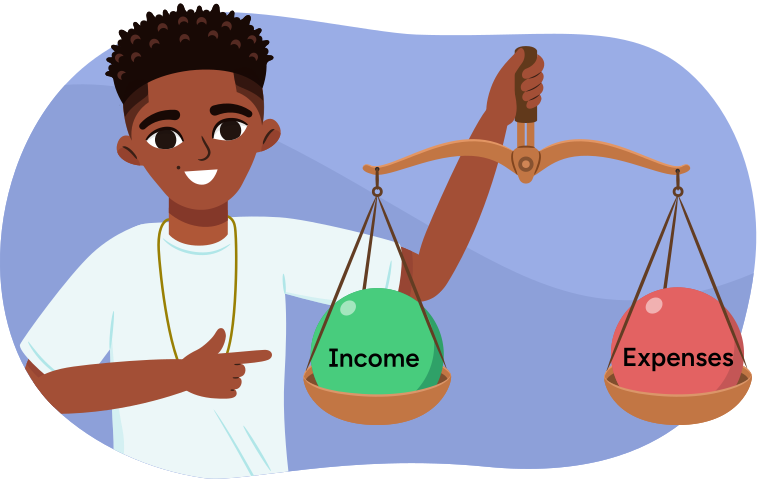
If someone spends less money than they earn, they can build up their savings. Building savings means putting money aside for future use, for example in a savings account.
As we build up savings, we can also start creating different saving goals and adjust our budget as necessary.
Income – expenses = positive number
Antonio’s budget

Let’s take a look at Antonio’s monthly budget.
Antonio loves building and solving puzzles. In his spare time, he babysits his neighbours’ kids, offers tutoring for math, and supports the local robotics club. He has also started taking an advanced robotics class at his local community centre.
Antonio's expenses include a transit pass, and he uses some of his income to buy meals at food trucks and local restaurants with friends.
He tracks his income and expenses on a spreadsheet.
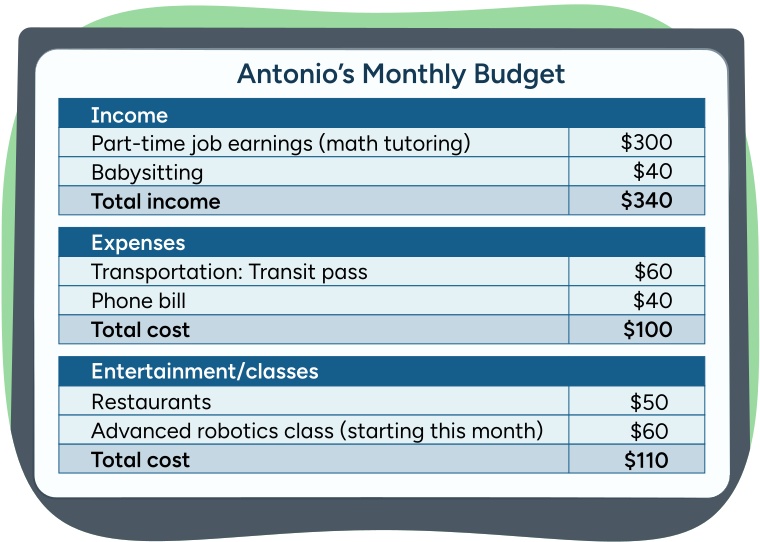
Antonio’s Monthly Budget
Income
Part-time job earnings (math tutoring) = $300
Babysitting = $40
Total income = $340
Expenses
Transportation: Transit pass = $60
Phone bill = $40
Total cost = $100
Entertainment/classes
Restaurants = $50
Advanced robotics class (starting this month) = $60
Total cost: $110
Antonio wants to figure out how much he has spent throughout the month. How can we calculate Antonio’s total spending?
Press the Antonio’s Expenses button to figure out what Antonio has spent.
We can add up all Antonio’s expenses and Antonio’s entertainment/classes.
Expenses + entertainment/classes = total spending
Expenses
- Transportation: Transit pass = $60
- Phone bill = $40
- Total cost = $100
Entertainment/classes
- Restaurants = $50
- Advanced robotics class (starting this month) = $60
- Total cost: $110
Expenses total: $60 + $40 = $100
Entertainment/classes total: $50 + $60 = $110
Grand total: $100 + $110 = $210
Antonio’s total spending for the month is $210.
If Antonio wanted to put $50 into a savings account to go towards parts for his robotics project, does he have enough money left over this month to do so? Press the Antonio’s Budget button to learn more.
To calculate how much money Antonio has left this month, we subtract his total spending from his income.
Income – expenses = ?
$340 - $210 = $130
Yes, Antonio has enough money left over to put $50 into his savings account.
Avery’s budget

Avery loves all things music! She sings in a band and has been playing the piano for many years. She recently started working for her piano teacher as a junior assistant. She also really enjoys math and is a math tutor in her spare time.
Avery rides her bike in the spring, summer, and autumn. The weather is getting nicer so she is going to start biking again. However, she needs to buy a few items to fix up her bike which has been stored over the winter. She also pays for advanced piano classes, contributes to her phone bill, and buys her own afterschool snacks.
Avery writes out her income, expenses, and entertainment/classes costs in her notebook.
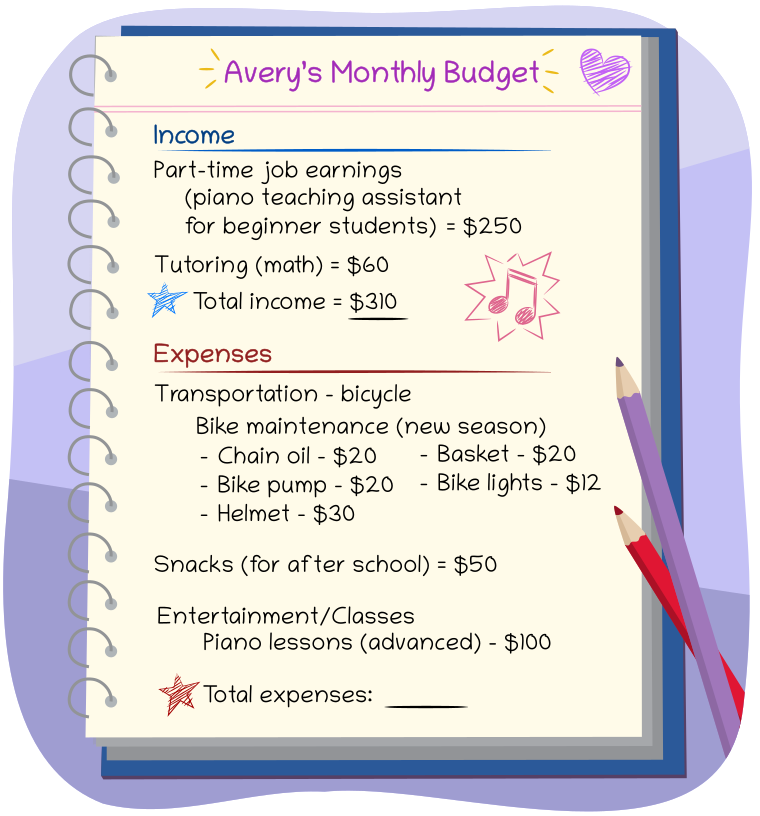
Avery’s monthly budget.
Income
Part-time job earnings (piano teaching assistant for beginner students) = $250
Tutoring (math) = $60
Total income = $310
Expenses
Transportation – bicycle
Bike maintenance (new season)
- Chain oil - $20
- Bike pump - $20
- Helmet - $30
- Basket - $20
- Bike lights - $12
Snacks (for afterschool) = $50
Entertainment/Classes
Piano lessons (advanced) - $100
Total expenses: ___________________
Avery wants to figure out how much she has spent throughout the month. How can we calculate Avery’s total spending? Press the Hint button to learn more.
Expenses + entertainment/classes = total spending.
Does Avery have any money left this month to put towards her budget next month? Press the Hint button to learn more.
Income – expenses = ?
If Avery’s main expenses increase next month, what might she do to balance her budget? Should she keep the same budget as this month? Why or why not?
Reflection

What are two or three pieces of advice you would share with a friend about creating and balancing budgets?
Record your thoughts using a method of your choice.