Social-emotional learning

Did you know?

International Olympic Committee
The International Olympic Committee conducted a study, which revealed that one-in-five elite athletes had suffered poor mental health in 2022.
Source:
International Olympic Committee. (2022, October 10). IOC expands mental health support for athletes. International Olympic Committee. Retrieved February 28, 2023, from https://olympics.com/ioc/news/ioc-expands-mental-health-support-for-athletes
Social-emotional learning is just as important for NBA players as it is for students.
Are you ready to explore different aspects of social-emotional learning? Let’s begin!
Try it!

When you think of social and emotional skills, what comes to mind?
Record your ideas in the following mind map provided or in another method of your choice.
The following interactive is functional on desktop only.
Press the Start button to access the following interactive. This interactive will open in a new window.
Understanding emotions
Demar DeRozen
You look at social media, and people could portray a perfect life, and that could make someone else emotionally unstable because they get to comparing what they see on an everyday basis. You pick up your phone, and the access that you have to the world and life is not always reality. So many people get caught up in that, and sometimes it’s people behind that phone that’s looking at that and feel bad about themselves. So when you see someone really expressing how they may feel, that can uplift and give other people the confidence that they not alone.
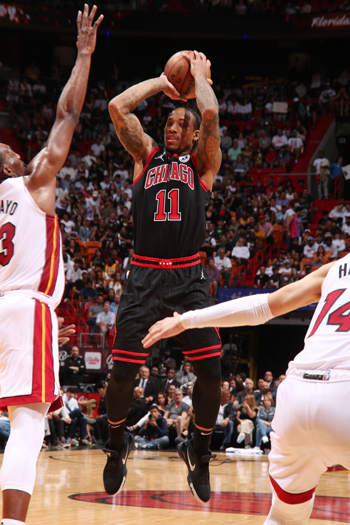
Demar DeRozen, #11 of the Chicago Bulls (2023), shoots in front of Bam Adebayo, #13 of the Miami Heat (2023), and Tyler Herro, #14 of the Miami Heat (2023).
Source:
Lee, M. (2022, April 20). How the NBA got serious about mental health. The Washington Post. Retrieved from https://www.washingtonpost.com/sports/2022/04/19/nba-mental-health-demar-derozan/
Being online
In a world where our online lives can feel as real as our offline lives, it is important to be aware of how social media can distort our emotions and perspective of ourselves. As DeMar DeRozan noted, what we encounter online is not necessarily reality.
Social-emotional learning skills are important for everyone’s health and development, online and offline. Fostering your own well-being and resilience will help you learn and thrive.

NBA Moment
In 2018, the NBA began its Mind Health program to supporting players' mental health. NBA Mind Health is an initiative to engage and educate about mental health as an essential element to wellness, on and off the court.
If you’re spending a lot of time on social media and feelings of sadness, stress, or loneliness are having a negative effect on your life, it may be valuable to re-examine your online habits and find a healthier balance.
Think

Have you ever experienced feelings of stress from social media?
Managing emotions and social media
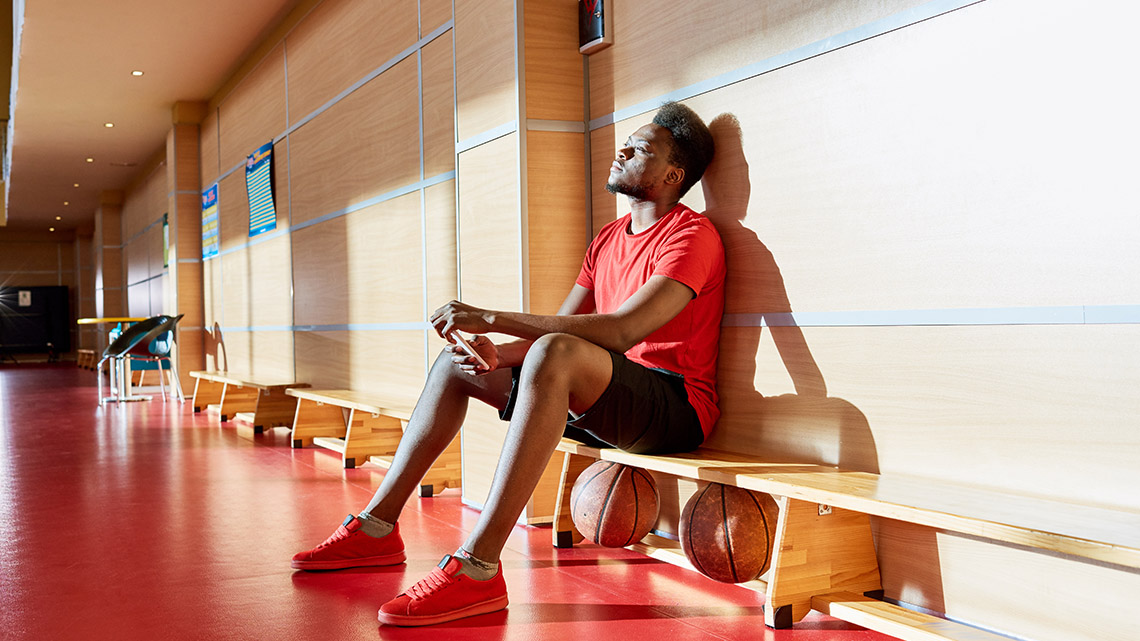
Our emotions are complex, so it’s no wonder that emotions influence almost all aspects of our everyday life.
Emotional responses, rather than evidence, are what influences our levels of engagement with a product or platform.
Take a moment and reflect on your learning!
Think
Have you ever encountered someone who gets extremely angry while playing online games?
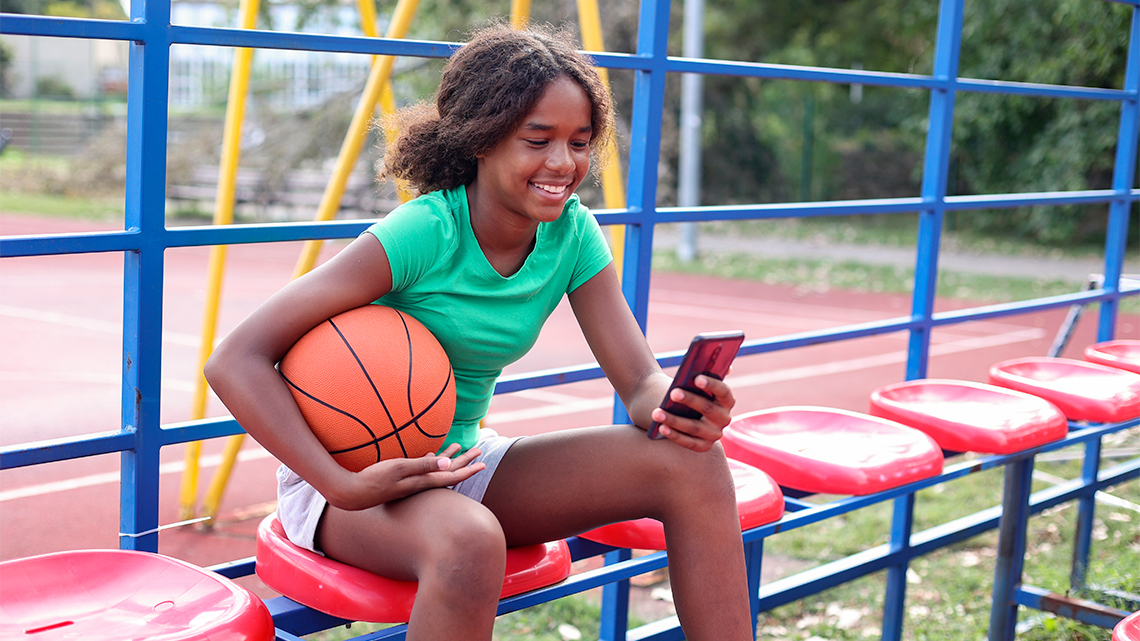
Since many of our social habits exist on social media, it’s impossible to ignore how emotions influence our behavior on social media platforms.
Similarly, social media platforms also use technology to influence our emotions.
Definition

Algorithm
An algorithm is a set of instructions to determine how things work. A social media algorithm is a system that automatically delivers content based on how likely a user is to interact with it.
This means that an algorithm can try and determine your interests and show you content that you are likely to interact with or share.
However, this system is designed to promote engagement, not necessarily emotional well-being.
Try it!
Explore the following questionnaire, “Social media balance,” by responding to each question. Be honest with your responses. Please note that this questionnaire is a general guideline to working with others, and does not apply to every individual or situation.
For this questionnaire, online gaming is considered a form of social media. When you have finished the questionnaire, press Submit Answers to explore your score.
Maintaining balance
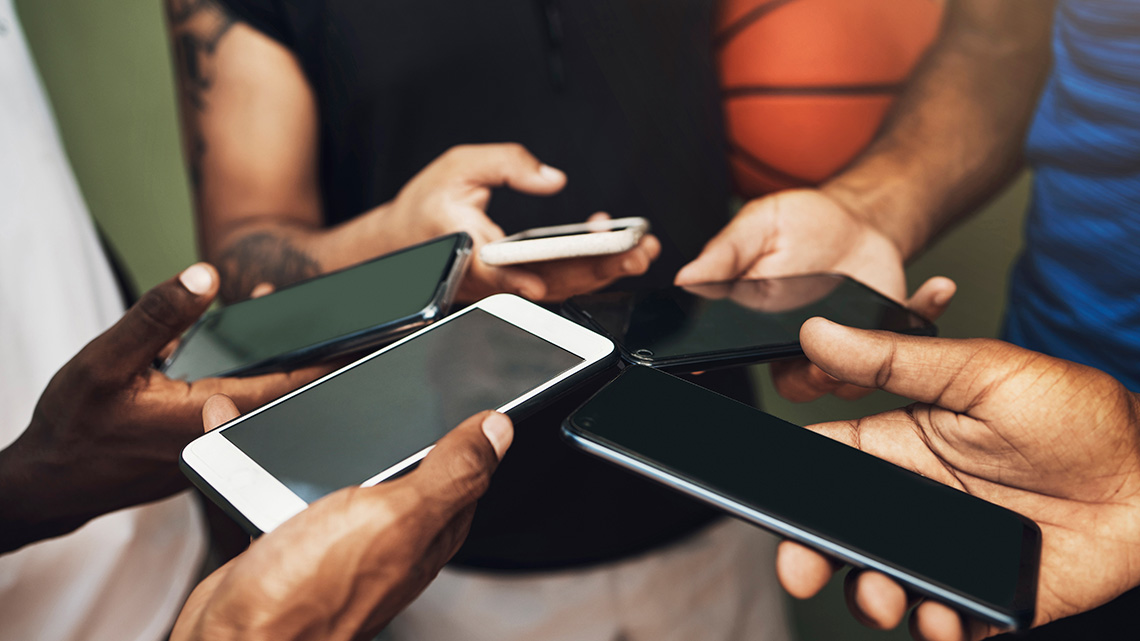
Do you think you have a balanced relationship with social media? How do we maintain balance and perspective?
Emotional regulation is the ability to manage your emotions, including when you have them and how you express them.
If you feel like your relationship with social media is becoming imbalanced, try the following strategies.
Press the following tabs to explore a few strategies for emotional regulation.
Talking to someone about your experiences might help you recentre your emotions.
Getting outdoors can help you reset after a difficult social media encounter.
Sometimes the best way to regain balance is to establish some boundaries and distance. Take time to focus on other hobbies or activities you enjoy doing.
If you find that you encounter a lot of negativity on social media platforms, you can instead interact with positivity.
Do you enjoy slow music? Maybe drawing or going for a walk?
Engaging in a calming activity can help you mentally 'reset.'
Identifying and managing emotions can help you express your own feelings and understand the feelings of others. If you are having an intense emotional reaction to social media, try and reflect on what you’re experiencing, why it’s being shown to you, and what the intended purpose might be.
Explore this!

Check out the following Know Brainers video about overuse of social media and the ‘infinite scroll.’
What were the impacts of eight hours of scrolling?
Reflect on your learning
Think
Revisit your completed “Social media balance questionnaire” and consider the following questions:
- What was your overall score, and do you think it is an accurate picture of who you are?
- What is one question that you answered “yes” to that you would like to work on improving?
- What is one strategy that could help you practise this skill?
Try it!
Social emotional case study
Reflecting on what we have learned about social-emotional skills regarding social media, as well as your own experiences, create a case study about a specific situation where social-emotional skills are being used regarding social media. The case study can be based on a situation that you have personally experienced, or it can be completely fictional.
You may record your case study in any method of your choice.
Consider the following questions when creating your case study:
- When did you realise emotional regulation was required?
- What were your browsing, and how did it make you feel?
- Which strategy did you use?
Excellent work! You’ve learned a lot about social-emotional learning and why it’s important in life as well as in sports. You deserve a break!